For a volume buyer, an off grid solar system is a product-line decision before it is a hardware order. Four decisions shape the line before any hardware is ordered: which architecture the market needs, what a complete package must contain, how the landed cost builds up, and what supplier evidence protects the order. This guide walks them in that order, for distributors, importers, and private-label buyers planning an off-grid or backup-power line and for the EPC and integrator teams who specify against those lines. Each step links to a dedicated guide with the calculations and part-level detail.
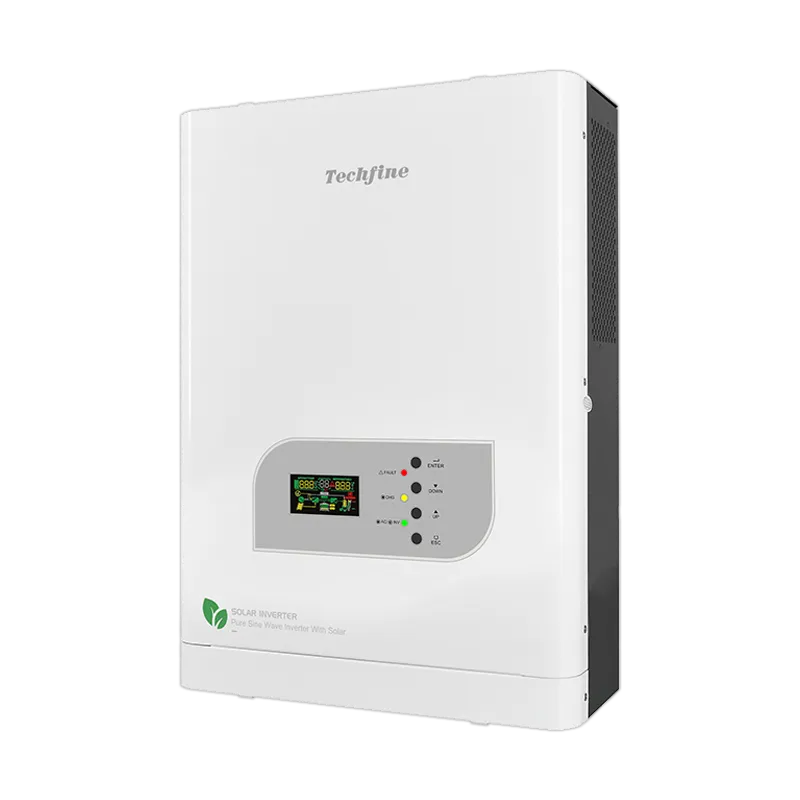
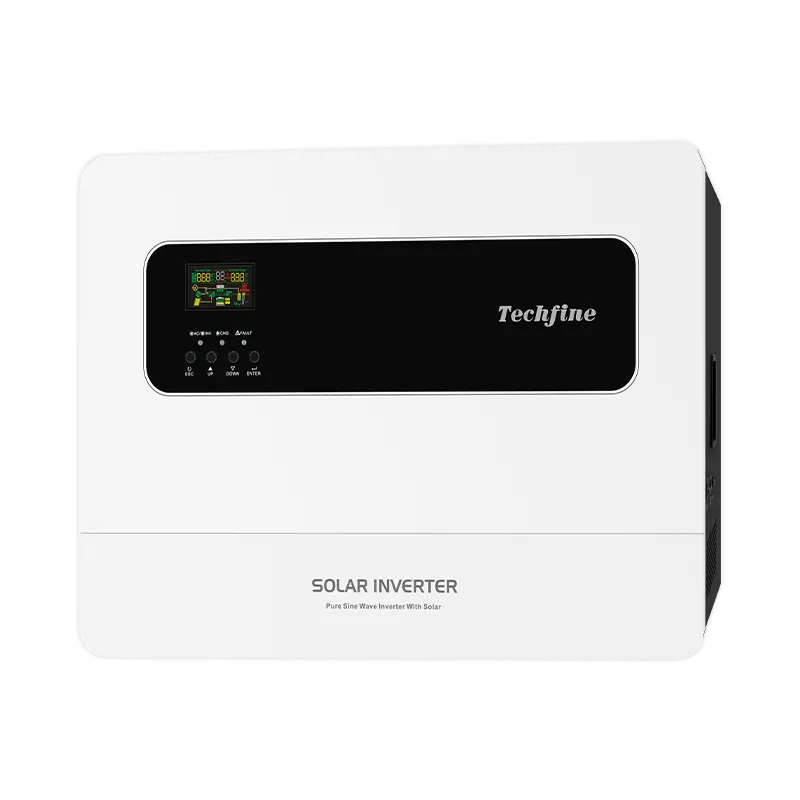
We are the manufacturer of the off-grid inverters, charge-control platforms, and battery products these lines are specified around (Guangdong Techfine Electronic Co., Ltd.). A complete kit still contains items we do not make, so each section marks where our products end and your sourcing scope begins. Market figures come from third-party sources you can check, and we quote no prices of our own.
Key Takeaways
- Define the load, architecture, sizing, and supplier requirements before selecting hardware; each step has a dedicated guide in this cluster.
- Stationary-storage battery packs dropped to $70/kWh in 2025, 45 percent lower than the year before (BloombergNEF, 2025); pack benchmarks and installed system prices track different stages of the value chain.
- A solar-backed package’s base BOM combines the array, battery bank, inverter or inverter-charger, charge-control stage, and balance-of-system hardware with protection; in a backup-only line the array and charge control become optional add-ons. The quotation must assign every site-dependent item an owner.
- A retail kit price covers packaged hardware only; it does not tell you landed cost at volume or delivered output at your design temperature.
- Our warranty runs two years from the distributor invoice date, with up to five years on select IP66 products.
- Before contacting any supplier, including us, write down your target market, load class, and monthly quantities.

What Is an Off-Grid (and Backup-Power) Solar System?
An off-grid solar system is a power system that generates, stores, and delivers electricity without a grid connection: solar array, battery bank, charge-control stage, inverter, and the protection and wiring that join them. Design practice sizes the system for the site’s least favorable season, and many sites add a generator or an AC charging input as a second source. The components guide covers each part in procurement terms, and the power-flow guide walks how energy moves through the stages.
In one common DC-coupled arrangement, energy moves one direction through those stages: the array feeds the charge-control stage, the stage charges the bank, the bank discharges through the inverter, and the inverter serves the AC loads. AC-coupled systems are the standard alternative, with the array and the bank keeping their own inverters on an AC bus. That separately AC-coupled layout is what the REopt planning model assumes, as documented by the National Laboratory of the Rockies (formerly NREL) in its 2024 off-grid design material (NREL/PR-7A40-89248, 2024).
Many off-grid sites also run a generator alongside solar and storage. Charge control stays a functional stage across these arrangements; whether it ships as a standalone controller or as a function inside an off-grid or hybrid inverter-charger depends on the model. Integration varies the same way: an all-in-one energy storage system can package the inverter, charge control, and battery in one enclosure.
Three architectures share these stages in different proportions:
- Off-grid runs with no grid connection and serves every load from the array, the bank, and where fitted, a generator.
- Hybrid backup keeps the grid connection and puts solar and storage between the grid and the loads, carrying the site through outages.
- Backup-only guards defined critical loads with a battery and an inverter-charger; solar enters when outages outlast the bank.
The choice among the three is a market decision, and the architecture section below makes the rule explicit. This guide uses the three names throughout, because the architecture you pick shapes supplier evaluation, certification scope, and sizing inputs.
How Do You Choose an Off-Grid Solar System?
The choice runs in four steps — load audit, architecture, sizing, supplier — and each step’s output becomes the next step’s input.
- Audit the loads. Record daily energy in kilowatt-hours, the surge draw of motor-driven equipment, the day-to-night split, and the design temperature of the installation environment. The output is a load profile your whole line can be specified against; the system calculation guide opens with this audit, and the backup-design guide adapts it to critical-load planning.
- Fix the architecture and load scope. Match the outage profile of the target market to off-grid, hybrid, or backup-only, and set the load scope with it — which loads count, whether the design includes PV, and what autonomy the market expects. Then decide the integration level — an all-in-one enclosure or separate components. The architecture section that follows covers the fork in market terms; the all-in-one overview and the integrated-versus-separate comparison cover integration.
- Size the system inside it. Sizing turns the requirement inputs into the model selections you order. The inputs are daily energy, autonomy target, continuous and peak load, surge duration, and the design ambient of the installation environment. The outputs are the bank’s usable and installed capacity and current capability, plus the inverter’s continuous rating with its surge rating and duration. When the design includes PV, the outputs also cover the array rating and its recharge window. “How big of a solar system do I need for off-grid living?” gets its answer from these selections. A cabin drawing a few kilowatt-hours a day needs a far smaller system than a whole-house property with cooling. The calculation guide, the battery bank sizing guide, and the inverter sizing and derating guide carry the math for each stage.
- Evaluate the supplier. Certificates, terms, and process discipline decide whether a validated design survives contact with production and the field. The supplier section below lists the seven checks, all of them verifiable before you wire a deposit.
Worked as a sequence, these steps produce the specification brief a factory can quote against.
Off-Grid or Hybrid Backup: Which Architecture Fits Your Market?
The outage profile decides the fork: no grid service points to off-grid, chronic outages point to hybrid backup, and rare outages over a reliable grid point to backup-only. Load criticality sharpens the choice inside each branch — the more costly an interruption, the more autonomy and redundancy the specification carries.
Each branch has a natural market. Off-grid systems serve sites the grid does not reach or cannot reach economically — remote telecom, agriculture, and rural electrification programs. Hybrid backup serves markets with load-shedding or chronic outages. Backup-only protects critical loads: medical, data, security, and process loads. The sites that need it run on an otherwise reliable grid, where an outage is expensive. Whether a given platform may export to the grid depends on the market’s rules and the model’s certification scope; treat export capability as a per-market question.
Three guides provide the detail: the on-grid versus off-grid comparison for the core trade-off, the hybrid versus grid-tie inverter guide for the inverter-level differences, and the backup-power design guide for autonomy days, switchover, and critical-load planning in outage-prone markets.
If you are earlier in the process — still weighing whether an OEM/ODM product line fits your market at all — our services overview maps the cooperation scopes we support before you commit to an architecture.
What Should a Complete Package with Batteries Include?
For an off-grid or solar-backed package, the base bill of materials includes a solar array, a battery bank, an inverter or inverter-charger, a charge-control stage, and balance-of-system hardware including protection devices. In a backup-only line, the array and the charge-control stage become optional add-ons; the bank and the inverter-charger stay core. The table below itemizes the solar-backed case; the components guide details each line at part level.
| Package item | What it covers | The buyer check |
|---|---|---|
| Solar array | Modules sized to the recharge window | Module wattage and voltage window fit the charge-control stage |
| Battery bank | Chemistry, capacity, and BMS | Bank voltage, capacity, and series/parallel limits are stated by model |
| Inverter or inverter-charger | DC-to-AC conversion; grid interaction where the architecture includes it | Continuous and surge ratings hold at the design temperature |
| Charge-control stage | PV charge regulation — standalone or integrated, depending on the model | Charge current stays inside the bank’s BMS limits |
| Balance of system, with protection | Cables, connectors, bus bars, monitoring, breakers, fuses, disconnects, and overcurrent/overvoltage safeguards | Every conductor and protection device is specified, sized, and documented with its calculation |
A solar-backed quotation itemizes the five rows above as its base package. Mounting and racking, earthing hardware, and AC-side distribution are commonly quoted as options instead. Installation labor, permits, and any market-specific certification of the installed system have no default owner; the quotation must assign each one to the supplier, the EPC, or the channel partner. A purchase order that skips this assignment leaves items no one is contracted to deliver.
This line-by-line assignment is also what makes a “package with batteries” claim verifiable: every item in the table has a specification and a document behind it, and everything outside it has a named owner.
Integration level is the second decision inside the BOM. An all-in-one enclosure simplifies installation and inventory; separate components trade that for field replaceability and per-stage upgrading. The TCO comparison works through the procurement consequences of each path, and for a worked example at kit level, the 24V kit procurement guide specifies a complete small-system BOM end to end.
How Much Does an Off-Grid Solar System Cost?
Two very different cost layers answer this question: the installed system price a consumer pays, and the hardware bill of materials inside a buyer’s container. The two layers answer different questions and are never directly comparable.
On the consumer side, an installed system price is a different object from the hardware inside it. It stacks everything between the factory gate and a working installation on top of the ex-works bill of materials, and a consumer quote or a kit sticker each prices a different slice of that stack. A sticker in particular names a price while saying almost nothing about the specification behind it.
On the factory side, one published survey benchmark covers the battery stage. In 2025, stationary-storage battery packs dropped to $70/kWh, 45 percent lower than the year before, with LFP packs at $81/kWh across segments (BloombergNEF, 2025). That figure is a survey-level pack benchmark; it prices the battery stage of the value chain, and it cannot be read as a kit landed cost. The distributor cost guide reconciles the two worlds line by line.
Between a pack benchmark and an installed system sit six line items — the first three build the landed cost of the order, the last three decide the commercial layer around it:
- Ex-works hardware — the bill of materials you containerize, benchmarked against pack and module prices.
- Freight and logistics — container volume, lane, and season.
- Duty and import taxes — HS classification and the destination regime. These three together are the landed cost of the hardware.
- Certification and documentation — standards coverage and test reports per market.
- Downstream channel and installation — installation and local-channel costs between landed hardware and the installed price your customer sees.
- After-sales reserve — warranty exposure, spares stocking, and RMA handling.
Model the six before comparing supplier quotes. A low ex-works price on the wrong certification scope can fail at customs; the same price on the wrong chemistry can fail in the field, under warranty. For markets weighing solar against diesel generation, the solar-versus-generator TCO guide runs the ten-year arithmetic.
How Do You Evaluate an Off-Grid Solar System Supplier?
Seven verifiable checks cover certification, terms, and process discipline; ask for evidence on each before the first order. All seven describe our own terms below, and all seven transfer to any supplier you evaluate.
- Certificates naming the covered models. EMC and LVD coverage attaches to specific series, and the certificate names them. Ours include EN 62109-1/-2 on the GA/GD JMHBS, GA6248JMHBG, GA8648MH, GA11048MH, and VS series, and EN IEC 62619 on the LC230-512 battery. Our ISO 9001 and ISO 14001 certificates run to August 2027. Ask for the certificate list by series, and read the covered models before relying on any coverage claim.
- MOQ posture before the specs. Minimum order quantity varies by product platform and is confirmed per project. A number quoted before any platform discussion deserves a follow-up question about what it assumes.
- A sample-to-production flow with a named freeze point. Ours runs ten steps, from requirement collection through after-sales feedback, with a golden-sample approval before pilot production. The freeze point is what your QA team audits against when production units arrive.
- Version freeze discipline. A customer once asked us to swap in a quieter fan after sample approval. The replacement moved 20–25 percent less air, and thermal testing under high load showed temperatures around the power stage rising, so we kept the approved fan and adjusted the fan-control logic. After repeating the high-load and thermal tests, we froze the final configuration — the behavior to require from any supplier.
- A warranty start date in writing. Ours runs two years from the distributor invoice date, with up to five years on select IP66 products and paid extension available. The start-date convention decides who absorbs shelf time, so fix it in the contract.
- An RMA process with root-cause classification. Ours classifies each case as product quality, installation error, operating environment, or external damage, and resolves it as repair, replacement, or credit. Cost allocation for freight, duty, labor, and testing is defined in the contract case by case.
- Spares stocked at distributor level. We provision approximately 2 percent of order quantity as distributor-held stock, with the ratio depending on purchase volume; very small orders do not carry this provision. Covered parts include PCB boards, fans, displays, communication modules, and enclosure parts. Distributor-held stock shortens the repair path for your customers.
Scoping an off-grid or backup-power product line? Discuss your off-grid product-line requirements with our team — bring your target market, load class, and monthly quantities, and we will review them and clarify the next configuration step.
FAQ: Off-Grid & Backup-Power Systems
What are the common problems with off-grid solar systems?
Check sizing and installation first for failure modes: undersized autonomy, mismatched bank modules, BMS trips under motor starts, thermal derating at high ambient, loose terminations, and skipped maintenance. Our inverter problems guide covers triage, and the power-flow guide maps the stages where these faults originate.
Can I run an air conditioner on an off-grid system?
Yes, when the system is engineered for the starting event. Compressors draw roughly four to eight times their running current while the rotor accelerates, as general engineering practice, so the inverter’s surge rating, the bank’s discharge headroom, and the delivered output at your design temperature all need margin. The inverter sizing and derating guide carries the checks.
How big of a solar system do I need for off-grid living?
System size is a set of model selections, and they follow from requirement inputs: daily energy, the autonomy target, continuous and peak load, surge duration, and the design ambient. The architecture choice sets which loads count. The system calculation guide and the battery bank sizing guide carry the arithmetic from inputs to selections, step by step.
Which is better, on-grid or off-grid?
Grid reliability and load criticality set the answer. Where service is reliable and outages are rare, a grid-tied system keeps its solar array, adds grid support, and needs no autonomy battery bank. An off-grid build would require that bank for the same loads. Where outages are chronic or service is absent, off-grid or hybrid designs carry the site. The on-grid versus off-grid comparison works through the differences in detail.
When Is an Off-Grid Product-Line Purchase Order Ready?
A purchase order for an off-grid or backup-power line is ready when six decisions are written down:
- Market frame — target market, load class, and monthly quantities, in one line each.
- Architecture and load scope — off-grid, hybrid, or backup-only, chosen by outage profile, with the loads it must carry.
- Sizing selections — the bank’s usable capacity and current capability, plus the inverter’s continuous and surge ratings. When the design includes PV, add the array rating and its recharge window. Derive every selection from the requirement inputs via the calculation guides, inside the chosen architecture.
- Package completeness — every base-BOM item specified, every site-dependent item assigned an owner.
- Cost model — the six landed and commercial line items, modeled before supplier quotes are compared.
- Supplier evidence — the seven checks answered with documents, and a version freeze your QA can audit.
Together, the six decisions form the documentation a purchase order can be reviewed against.
Ready to scope the line? Tell our team your target market, load class, and monthly quantities and we will review the requirements and clarify the next configuration step. The $70/kWh benchmark is BloombergNEF’s 2025 survey figure, the topology reference is the National Laboratory of the Rockies (formerly NREL), and no price in this guide is a Techfine quote.