
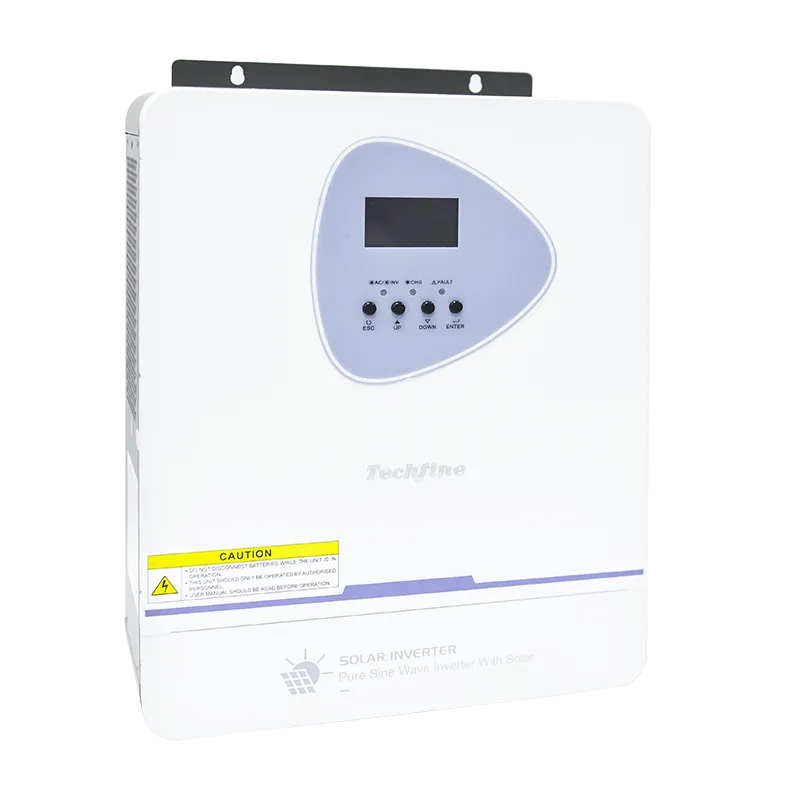
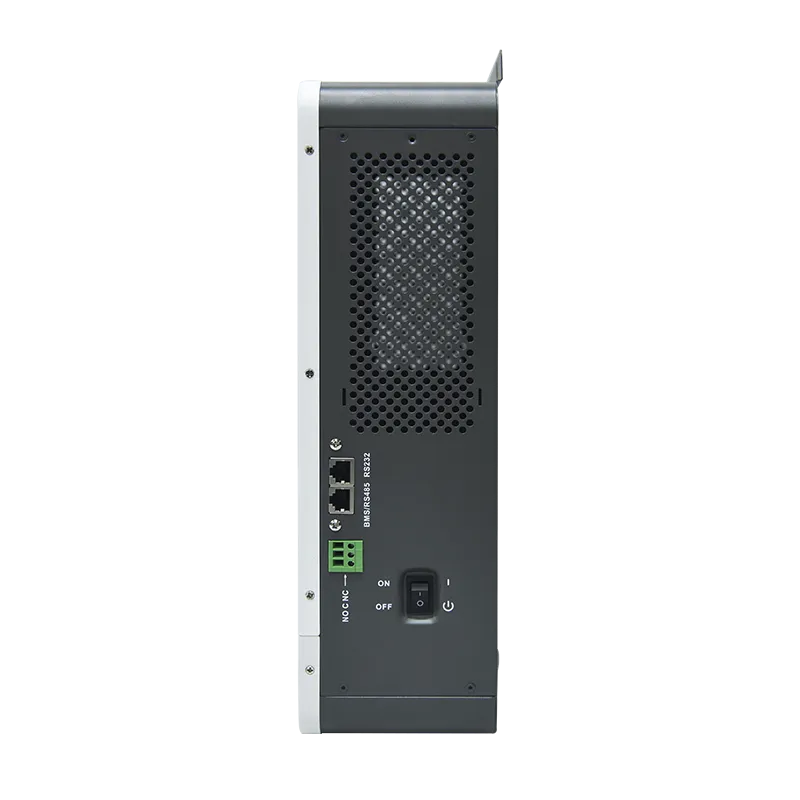
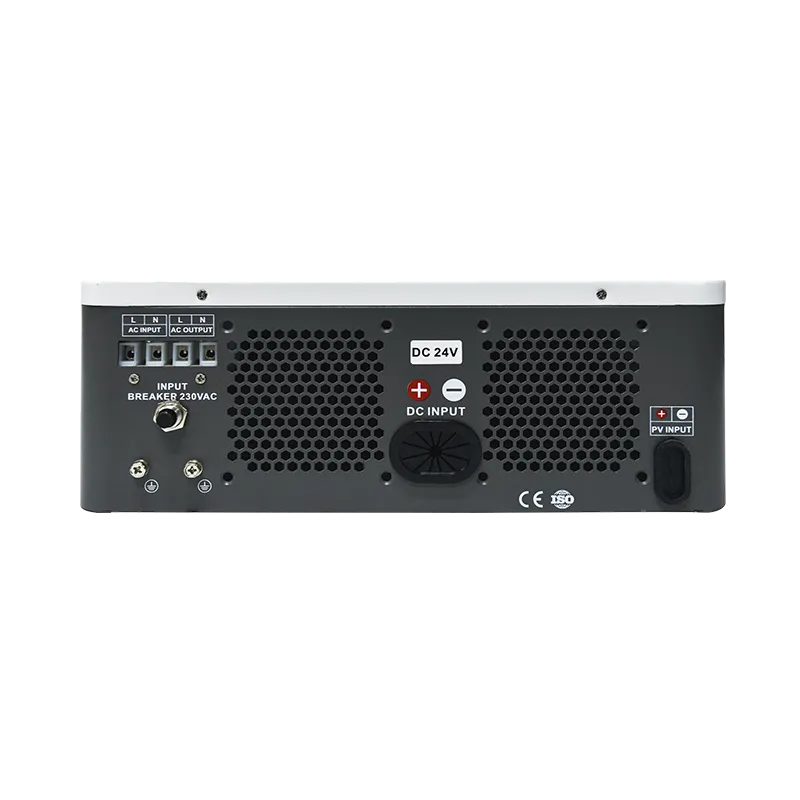
EA Series · Product gallery
SOLAR + STORAGE · 1.6–11 kW
EA Series
Solar Inverter
Start with your battery voltage. Build around your solar potential. EA brings 12, 24 and 48 V systems into one range, with six inverter sizes and dual MPPT on the 8.6 and 11 kW models.
12 / 24 / 48 V systems · LCD control · Solar + AC charging
Select a model to see its ratings below.
SOLAR INPUT
Make room for your solar array
From a lower-voltage array to a larger dual-MPPT system, EA gives you three input ranges to build around. Choose the range with your model, then size the array within its PV limit.
MPPT range is the voltage window for solar tracking. Keep the array’s open-circuit voltage within the 500 V DC maximum.
EA2012EMH · EA3024EMH
30–500 V DC
MPPT operating range
Up to 2 / 3 kW PV input
One MPPT tracker
EA4024EMH · EA6248EMH
60–500 V DC
MPPT operating range
Up to 5 / 6.2 kW PV input
One MPPT tracker
EA8648EMH · EA11048EMH
90–500 V DC
MPPT operating range
Up to 11 kW PV input
Two MPPT trackers · 2 × 5.5 kW
LOCAL CONTROL + CONNECTIONS
Check the power.
Set the priorities.
01
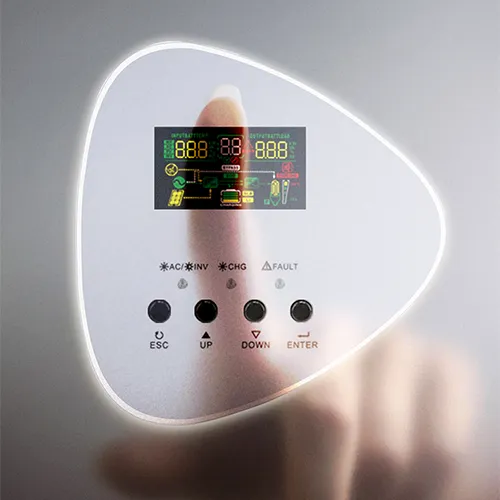
See the load you are supplying
Read operating mode, load power and input/output information on the LCD.
02
Set charging for your battery
Adjust solar and AC charging settings to match the connected battery system.
03
Connect the rest of your system
Use lithium battery communication and the generator-start dry contact. Add external WiFi when you want remote monitoring.
SYSTEM OVERVIEW
Where the power goes
Use solar to power your loads and charge your battery. Bring in utility or generator support when you need it.
EA SERIES
Store energy for later. Charge your battery when power is available, then draw on it during battery-powered operation.
Choose the right capacity. Match your connected loads to the output rating of your chosen EA Series model.
THE DETAILS, SIDE BY SIDE
Technical specifications
Compare the 6 models by rated output, battery voltage, solar input and expansion support.
Scroll sideways to compare all models.
| Specification | EA2012EMH | EA3024EMH | EA4024EMH | EA6248EMH | EA8648EMH | EA11048EMH |
|---|---|---|---|---|---|---|
| Output | ||||||
| Rated output power | 1600 W | 3000 W | 4000 W | 6200 W | 8600 W | 11000 W |
| Output voltage | 220 / 230 / 240 V AC ±5% | 220 / 230 / 240 V AC ±5% | 220 / 230 / 240 V AC ±5% | 220 / 230 / 240 V AC ±5% | 220 / 230 / 240 V AC ±5% | 220 / 230 / 240 V AC ±5% |
| Output frequency | 50 / 60 Hz ±0.1% | 50 / 60 Hz ±0.1% | 50 / 60 Hz ±0.1% | 50 / 60 Hz ±0.1% | 50 / 60 Hz ±0.1% | 50 / 60 Hz ±0.1% |
| Output waveform | Pure sine wave | Pure sine wave | Pure sine wave | Pure sine wave | Pure sine wave | Pure sine wave |
| Peak apparent power | 3200 VA | 6000 VA | 8000 VA | 12400 VA | 17200 VA | 22000 VA |
| Transfer time | 10 ms (computer equipment); 20 ms (household equipment) | 10 ms (computer equipment); 20 ms (household equipment) | 10 ms (computer equipment); 20 ms (household equipment) | 10 ms (computer equipment); 20 ms (household equipment) | 10 ms (computer equipment); 20 ms (household equipment) | 10 ms (computer equipment); 20 ms (household equipment) |
| AC input | ||||||
| Nominal input voltage | 220 / 230 / 240 V AC | 220 / 230 / 240 V AC | 220 / 230 / 240 V AC | 220 / 230 / 240 V AC | 220 / 230 / 240 V AC | 220 / 230 / 240 V AC |
| Input voltage range | 90–280 V AC ±3 V (Normal); 170–280 V AC ±3 V (UPS) | 90–280 V AC ±3 V (Normal); 170–280 V AC ±3 V (UPS) | 90–280 V AC ±3 V (Normal); 170–280 V AC ±3 V (UPS) | 90–280 V AC ±3 V (Normal); 170–280 V AC ±3 V (UPS) | 90–280 V AC ±3 V (Normal); 170–280 V AC ±3 V (UPS) | 90–280 V AC ±3 V (Normal); 170–280 V AC ±3 V (UPS) |
| Input frequency | 50 / 60 Hz (auto-sensing) | 50 / 60 Hz (auto-sensing) | 50 / 60 Hz (auto-sensing) | 50 / 60 Hz (auto-sensing) | 50 / 60 Hz (auto-sensing) | 50 / 60 Hz (auto-sensing) |
| Battery & charging | ||||||
| Battery system voltage | 12 V | 24 V | 24 V | 48 V | 48 V | 48 V |
| Constant charging voltage | 14.1 V DC | 28.2 V DC | 28.2 V DC | 56.4 V DC | 56.4 V DC | 56.4 V DC |
| Float charging voltage | 13.5 V DC | 27 V DC | 27 V DC | 54 V DC | 54 V DC | 54 V DC |
| Maximum solar charging current | 100 A | 100 A | 120 A | 120 A | 150 A | 150 A |
| Maximum AC charging current | 60 A | 60 A | 100 A | 100 A | 120 A | 150 A |
| Maximum combined charging current | 100 A | 100 A | 120 A | 120 A | 150 A | 150 A |
| Solar input | ||||||
| MPPT trackers | 1 | 1 | 1 | 1 | 2 | 2 |
| Maximum PV input power | 2000 W | 3000 W | 5000 W | 6200 W | 11000 W | 11000 W |
| MPPT voltage range | 30–500 V DC | 30–500 V DC | 60–500 V DC | 60–500 V DC | 90–500 V DC | 90–500 V DC |
| Maximum PV open-circuit voltage | 500 V DC | 500 V DC | 500 V DC | 500 V DC | 500 V DC | 500 V DC |
| Grid operation | ||||||
| Grid connection | Not supported | Not supported | Supported | Supported | Supported | Supported |
| Grid output voltage | — | — | 220 / 230 / 240 V AC | 220 / 230 / 240 V AC | 220 / 230 / 240 V AC | 220 / 230 / 240 V AC |
| Grid output current | — | — | 17.4 A | 26.9 A | 37.4 A | 47.8 A |
| Power factor | — | — | >0.99 | >0.99 | >0.99 | >0.99 |
| Maximum DC/AC efficiency | — | — | 98% | 98% | 98% | 98% |
| Control & expansion | ||||||
| Display | LCD with operating status and load power | LCD with operating status and load power | LCD with operating status and load power | LCD with operating status and load power | LCD with operating status and load power | LCD with operating status and load power |
| Communication interface | RS232 (2400 baud) | RS232 (2400 baud) | RS232 (2400 baud) | RS232 (2400 baud) | RS232 (2400 baud) | RS232 (2400 baud) |
| Battery communication | Lithium battery BMS communication | Lithium battery BMS communication | Lithium battery BMS communication | Lithium battery BMS communication | Lithium battery BMS communication | Lithium battery BMS communication |
| Remote monitoring | External WiFi module (optional) | External WiFi module (optional) | External WiFi module (optional) | External WiFi module (optional) | External WiFi module (optional) | External WiFi module (optional) |
| Generator control | Dry contact for generator start | Dry contact for generator start | Dry contact for generator start | Dry contact for generator start | Dry contact for generator start | Dry contact for generator start |
| Parallel operation | Not supported | Not supported | Not supported | Not supported | Supported | Supported |
| Installation | ||||||
| Operating temperature | −10°C to +50°C | −10°C to +50°C | −10°C to +50°C | −10°C to +50°C | −10°C to +50°C | −10°C to +50°C |
| Storage temperature | −15°C to +60°C | −15°C to +60°C | −15°C to +60°C | −15°C to +60°C | −15°C to +60°C | −15°C to +60°C |
| Operating humidity | 20–95% RH (non-condensing) | 20–95% RH (non-condensing) | 20–95% RH (non-condensing) | 20–95% RH (non-condensing) | 20–95% RH (non-condensing) | 20–95% RH (non-condensing) |
BEFORE YOU CHOOSE
A few useful answers.
Which EA model fits my battery voltage?
Choose EA2012EMH for a 12 V battery, EA3024EMH or EA4024EMH for 24 V, and EA6248EMH, EA8648EMH or EA11048EMH for 48 V. Then match the inverter’s rated output to the loads that will run together.
Do all six models use the same PV voltage range?
No. The 1.6 and 3 kW models have a 30–500 V DC MPPT range. The 4 and 6.2 kW models use 60–500 V DC, while the 8.6 and 11 kW models use 90–500 V DC. Keep the array within the selected model’s voltage and power limits.
Which models have two MPPT trackers?
EA8648EMH and EA11048EMH each have two MPPT trackers and accept up to 11 kW of PV input, split as 2 × 5.5 kW. The other four models have one tracker.
Which EA models support grid connection and parallel operation?
Grid connection is available from EA4024EMH upwards. Parallel operation is available on EA8648EMH and EA11048EMH. EA2012EMH and EA3024EMH do not support grid connection.
Can I check the system without adding WiFi?
Yes. The front LCD shows operating mode, load information and input/output readings. Add an external WiFi module for remote monitoring. Lithium battery communication and a generator-start dry contact support system integration.
