
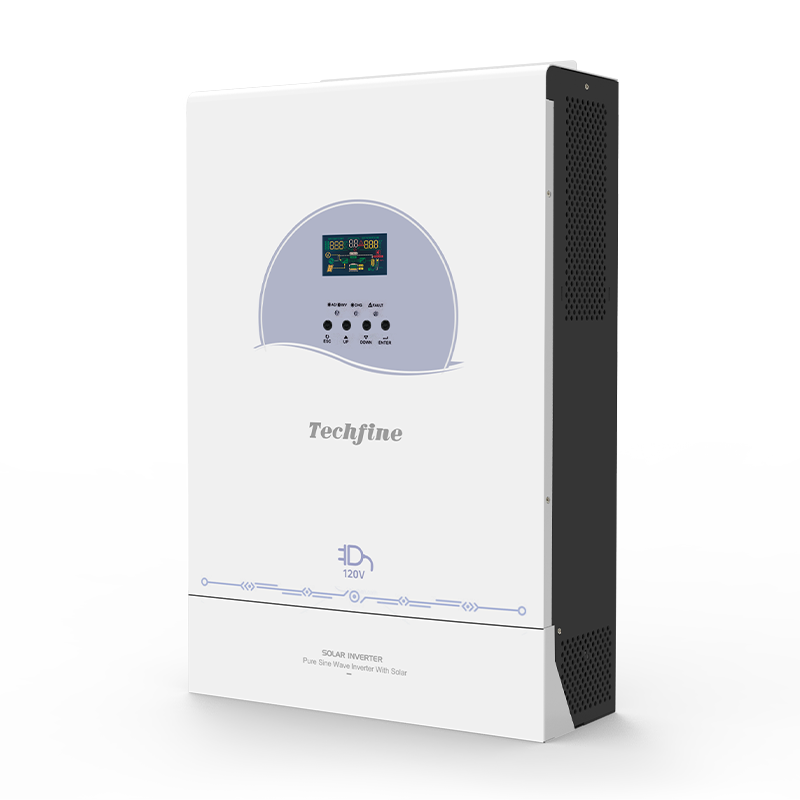
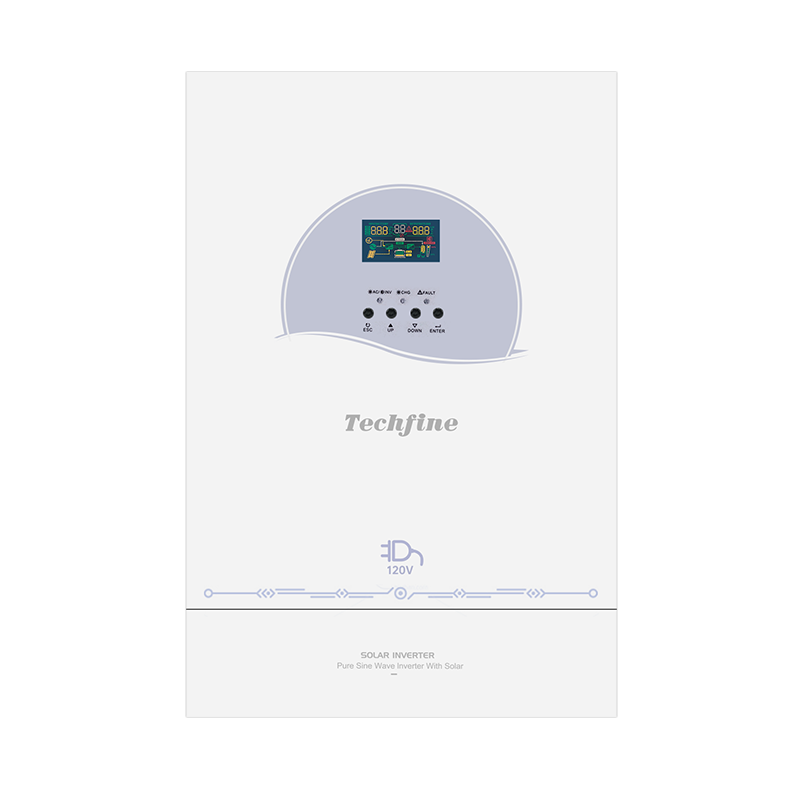

GA Pro S Series · Product gallery
110 / 120 V AC · 4 / 5.5 kW
GA Pro S Series
110/120 V Hybrid Inverter
Solar power for a 110/120 V system, with room to grow. Choose 4 kW with a 24 V battery or 5.5 kW with a 48 V battery. Build a multi-inverter split-phase system when your project calls for it.
110 / 120 V AC · 60 Hz · Multi-unit split phase
110 / 120 V SYSTEMS
The AC voltage you need.
The system size you choose.
One GA Pro S supplies 110/120 V AC at 60 Hz. For a split-phase project, combine matching inverters and configure them as a coordinated system.
Both the 4 kW / 24 V and 5.5 kW / 48 V models support multi-inverter configurations, with up to nine units in parallel.
110 / 120 V
AC output from one inverter
Choose 4 kW or 5.5 kW to suit your connected load.
POWER PRIORITIES
Choose what supplies the shortfall
Use solar first in both arrangements. Decide whether utility power or stored battery energy comes next.
Solar first, utility support
When solar cannot cover the load, utility supply makes up the shortfall.
Select SUB as the output source priority.
01
Solar
02
Utility
DISPLAY + COMMUNICATION
Local control, with options to connect
INCLUDED
LCD control
Check system status and set charging and supply priorities at the front panel.
OPTIONAL
Touchscreen
Choose a touchscreen configuration when you want a touch interface.
OPTIONAL
External WiFi
Add remote monitoring with an external WiFi module.
For lithium battery communication, match the battery’s BMS protocol, cable and inverter settings.
SYSTEM OVERVIEW
Where the power goes
Use solar to power your loads and charge your battery. Bring in utility or generator support when you need it.


GA PRO S SERIES
Store energy for later. Charge your battery when power is available, then draw on it during battery-powered operation.
Choose the right capacity. Match your connected loads to the output rating of your chosen GA Pro S Series model.
THE DETAILS, SIDE BY SIDE
Technical specifications
Compare the 2 models by rated output, battery voltage, solar input and expansion support.
TAKE A CLOSER LOOK
Product resources
BEFORE YOU CHOOSE
A few useful answers.
Does one GA Pro S inverter provide split-phase power?
A single unit supplies 110/120 V AC. Split-phase operation uses multiple compatible inverters configured together. Both GA4024YMH and GA5548YMH support this system arrangement.
Which battery voltage should I choose?
GA4024YMH pairs a 24 V battery system with 4 kW rated output. GA5548YMH pairs a 48 V battery system with 5.5 kW rated output. The battery voltage is separate from the 110/120 V AC output.
How much solar can I connect?
GA4024YMH accepts up to 6.5 kW of PV input; GA5548YMH accepts up to 8.5 kW. Each has one 27 A MPPT input with a 60–500 V DC operating range and a 500 V DC maximum open-circuit voltage.
Do both models have the same charging current?
No. The 24 V model has a maximum combined charging current of 120 A, while the 48 V model has 100 A. Their maximum AC charging currents are 80 A and 40 A respectively. Set charging current to suit the connected battery.
What comes with the inverter, and what is optional?
An LCD is the standard local interface. A touchscreen and external WiFi module are optional. Use a compatible lithium battery protocol, communication cable and settings for BMS communication.