
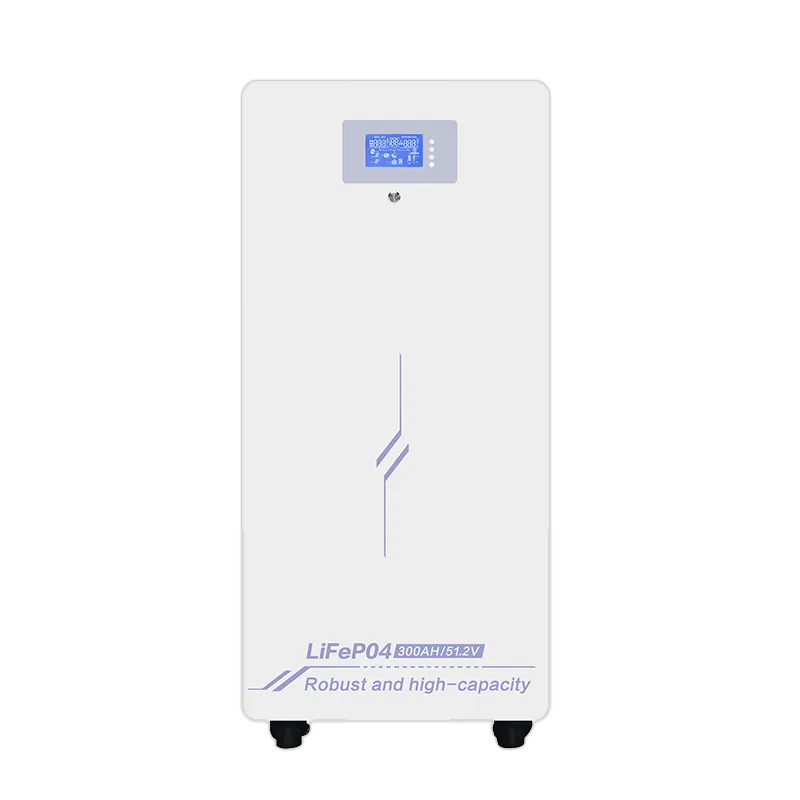
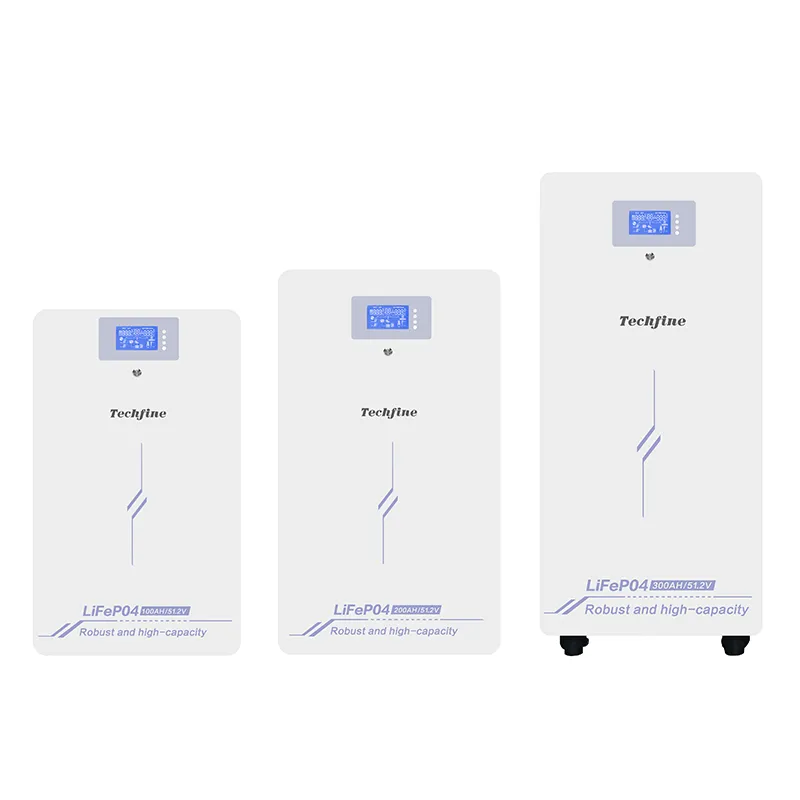
Select an image to explore the LC Series.
HOME ENERGY STORAGE · 25.6 / 51.2 V
LC Series
LiFePO₄ Storage Battery
Make room for stored solar energy. LC gives you wall-mounted and floor-standing choices, from 2.56 to 16.076 kWh per battery. Start with the voltage and space you have, then expand with matching modules as your storage needs grow.
Wall or floor installation · Up to 15 in parallel
Select a model to see its ratings below.
STORAGE THAT FITS YOUR SPACE
On the wall.
Or on the floor.
Choose the mounting style that works for your room. LC100 and LC230 mount on the wall; LC300 and LC314 stand on the floor. Both styles bring storage and local battery information into one enclosure.
25.6 / 51.2 V
Two battery voltage groups
2.56–16.076
kWh per battery
Keep floor space free
LC100 · LC230
Wall-mounted models in 25.6 V and 51.2 V.
Plan for floor-standing storage
LC300 · LC314
LC300 in 25.6 V / 51.2 V; LC314 in 51.2 V.
PARALLEL STORAGE
More stored energy.
The same system voltage.
Connect matching LC batteries in parallel to increase your storage reserve. The bank stays at the rated voltage of a single module.
Up to 15
Matching batteries in one parallel bank
Same model · Same voltage · Shared battery bank
Choose either a 25.6 V or 51.2 V bank. Use parallel connections with matching modules.
BATTERY INFORMATION + COMMUNICATION
See the charge.
Connect the system.
01
Check status at the battery
Use the LCD and SOC / operating indicators to check battery information locally.
02
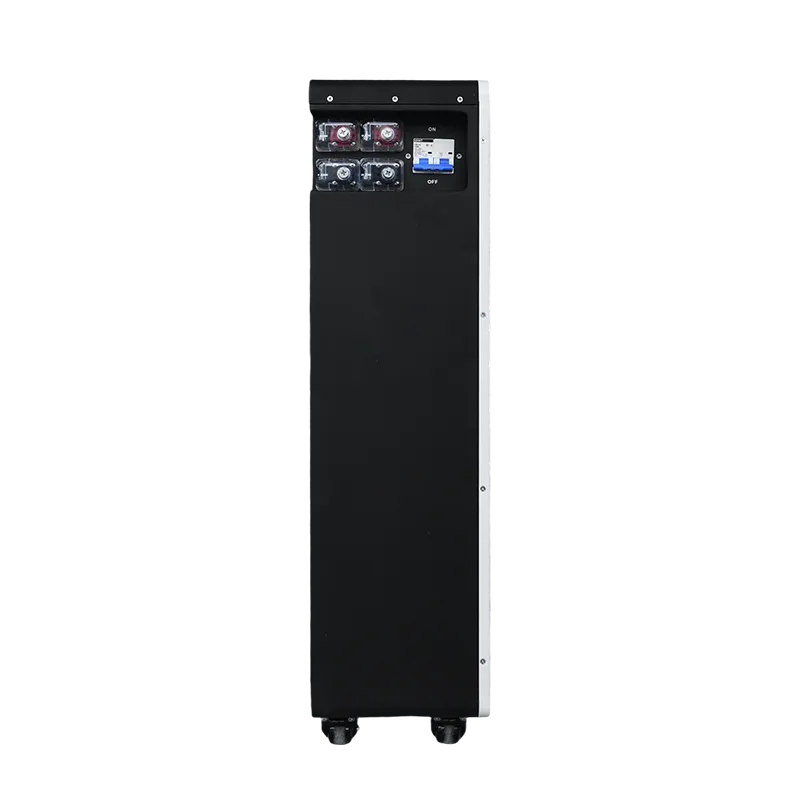
Connect through RS232, RS485 or CAN
Match the inverter protocol, cable and settings for battery communication.
03
Keep battery management inside
Cell balancing, SOC / SOH estimation and electrical protection are built into the battery.
THE DETAILS, SIDE BY SIDE
Technical specifications
Compare 7 models by energy, discharge current and space. Match the battery voltage to your system first.
Scroll sideways to compare all models.
| Specification | LC100 · 25.6 V | LC230 · 25.6 V | LC300 · 25.6 V | LC100 · 51.2 V | LC230 · 51.2 V | LC300 · 51.2 V | LC314 · 51.2 V |
|---|---|---|---|---|---|---|---|
| Energy & output | |||||||
| Available energy | 2560 Wh | 5888 Wh | 7168 Wh | 5120 Wh | 11776 Wh | 15360 Wh | 16076 Wh |
| Rated battery voltage | 25.6 V | 25.6 V | 25.6 V | 51.2 V | 51.2 V | 51.2 V | 51.2 V |
| Maximum continuous discharge current | 100 A | 200 A | 200 A | 100 A | 200 A | 200 A | 200 A |
| Maximum battery output | 2560 W | 5120 W | 5120 W | 5120 W | 10240 W | 10240 W | 10240 W |
| Operating voltage range | 21.6–29.2 V DC | 21.6–29.2 V DC | 21.6–29.2 V DC | 43.2–58.4 V DC | 43.2–58.4 V DC | 43.2–58.4 V DC | 43.2–58.4 V DC |
| Charging | |||||||
| Maximum charging voltage | 29.2 ± 0.2 V DC | 29.2 ± 0.2 V DC | 29.2 ± 0.2 V DC | 58.4 ± 0.2 V DC | 58.4 ± 0.2 V DC | 58.4 ± 0.2 V DC | 58.4 ± 0.2 V DC |
| Recommended charging voltage | 28.8 ± 0.2 V DC | 28.8 ± 0.2 V DC | 28.8 ± 0.2 V DC | 57.6 ± 0.2 V DC | 57.6 ± 0.2 V DC | 57.6 ± 0.2 V DC | 57.6 ± 0.2 V DC |
| Recommended charging current | 50 A | 115 A | 140 A | 50 A | 115 A | 140 A | 157 A |
| Battery management | |||||||
| Cell chemistry | LiFePO₄ | LiFePO₄ | LiFePO₄ | LiFePO₄ | LiFePO₄ | LiFePO₄ | LiFePO₄ |
| Cycle count | ≥6000 cycles (standard charge / discharge at room temperature) | ≥6000 cycles (standard charge / discharge at room temperature) | ≥6000 cycles (standard charge / discharge at room temperature) | ≥6000 cycles (standard charge / discharge at room temperature) | ≥6000 cycles (standard charge / discharge at room temperature) | ≥6000 cycles (standard charge / discharge at room temperature) | ≥6000 cycles (standard charge / discharge at room temperature) |
| Depth of discharge | ≥95% | ≥95% | ≥95% | ≥95% | ≥95% | ≥95% | ≥95% |
| Low-power consumption | ≤50 mA in operation; ≤200 µA in low-power mode | ≤50 mA in operation; ≤200 µA in low-power mode | ≤50 mA in operation; ≤200 µA in low-power mode | ≤50 mA in operation; ≤200 µA in low-power mode | ≤50 mA in operation; ≤200 µA in low-power mode | ≤50 mA in operation; ≤200 µA in low-power mode | ≤50 mA in operation; ≤200 µA in low-power mode |
| Protection | Overcharge, overcurrent, overvoltage, overdischarge, short circuit and high temperature | Overcharge, overcurrent, overvoltage, overdischarge, short circuit and high temperature | Overcharge, overcurrent, overvoltage, overdischarge, short circuit and high temperature | Overcharge, overcurrent, overvoltage, overdischarge, short circuit and high temperature | Overcharge, overcurrent, overvoltage, overdischarge, short circuit and high temperature | Overcharge, overcurrent, overvoltage, overdischarge, short circuit and high temperature | Overcharge, overcurrent, overvoltage, overdischarge, short circuit and high temperature |
| Charge balancing | Included | Included | Included | Included | Included | Included | Included |
| SOC / SOH estimation | Included | Included | Included | Included | Included | Included | Included |
| Display & connections | |||||||
| Display | LCD with SOC and operating-status indicators | LCD with SOC and operating-status indicators | LCD with SOC and operating-status indicators | LCD with SOC and operating-status indicators | LCD with SOC and operating-status indicators | LCD with SOC and operating-status indicators | LCD with SOC and operating-status indicators |
| Communication interfaces | RS232 / RS485 / CAN | RS232 / RS485 / CAN | RS232 / RS485 / CAN | RS232 / RS485 / CAN | RS232 / RS485 / CAN | RS232 / RS485 / CAN | RS232 / RS485 / CAN |
| Parallel expansion | Up to 15 batteries of the same model | Up to 15 batteries of the same model | Up to 15 batteries of the same model | Up to 15 batteries of the same model | Up to 15 batteries of the same model | Up to 15 batteries of the same model | Up to 15 batteries of the same model |
| Connection type | Parallel; series connection not supported | Parallel; series connection not supported | Parallel; series connection not supported | Parallel; series connection not supported | Parallel; series connection not supported | Parallel; series connection not supported | Parallel; series connection not supported |
| Mounting | Wall-mounted | Wall-mounted | Floor-standing | Wall-mounted | Wall-mounted | Floor-standing | Floor-standing |
| Installation & environment | |||||||
| Net weight | 28 kg | 51 kg | 65 kg | 49 kg | 96 kg | 117 kg | 117 kg |
| Dimensions | 367 × 412 × 165 mm | 442 × 394 × 231 mm | 510 × 394 × 230 mm | 629 × 367 × 175 mm | 394 × 680 × 243 mm | 820 × 394 × 230 mm | 820 × 394 × 230 mm |
| Discharge temperature | −10°C to +50°C | −10°C to +50°C | −10°C to +50°C | −10°C to +50°C | −10°C to +50°C | −10°C to +50°C | −10°C to +50°C |
| Charge temperature | 0°C to +60°C | 0°C to +60°C | 0°C to +60°C | 0°C to +60°C | 0°C to +60°C | 0°C to +60°C | 0°C to +60°C |
| Storage temperature | 0–35°C for >1 month; −20–45°C for ≤1 month | 0–35°C for >1 month; −20–45°C for ≤1 month | 0–35°C for >1 month; −20–45°C for ≤1 month | 0–35°C for >1 month; −20–45°C for ≤1 month | 0–35°C for >1 month; −20–45°C for ≤1 month | 0–35°C for >1 month; −20–45°C for ≤1 month | 0–35°C for >1 month; −20–45°C for ≤1 month |
BEFORE YOU CHOOSE
A few useful answers.
Which LC models mount on the wall?
LC100 and LC230 are wall-mounted. LC300 and LC314 stand on the floor. Choose the battery voltage first, then compare energy, weight and enclosure dimensions.
Can I combine 25.6 V and 51.2 V batteries?
Use batteries of the same model in a parallel bank. Keep 25.6 V and 51.2 V systems separate, and match the bank voltage to the inverter. LC does not support series connection.
How far can I expand the system?
Connect up to 15 matching LC batteries in parallel. Parallel expansion adds storage capacity while keeping the rated voltage of one battery.
Which communication interfaces are included?
LC includes RS232, RS485 and CAN interfaces. Match the inverter protocol, communication cable and settings to the battery for a working connection.
How do energy and discharge current affect my choice?
Energy, measured in kWh, determines the size of your storage reserve. Continuous discharge current limits how much DC current one battery can supply. Match both the energy you need and your inverter’s battery demand.
