
Understanding an inverter’s IP rating isn’t just technical jargon – it’s critical for ensuring your equipment survives in its intended environment. Two common ratings you’ll encounter are IP21 and IP65. Choosing the wrong one can lead to costly failures. Let’s break down what these codes mean and why the difference matters, especially for solar inverter applications.
What is the IP Rating in an Inverter?
An IP rating consists of two digits that indicate the level of protection provided by an electrical enclosure:
| Digit | Meaning |
|---|---|
| SecondDigit (0–8) | Protection against solid objects (e.g., dust, tools) |
| SecondDigit (0–8) | Protection against liquids (e.g., water jets, splashing) |
Each number corresponds to a specific level of protection. Below is a detailed breakdown of both dust protection levels and water resistance levels :
Dust Protection Levels (First Digit)
| Blocks the entry of wires, screws, and similar items. | Protection Degree | Description |
|---|---|---|
| 0 | No protection | No special protection provided |
| 1 | >50mm Objects | Prevents accidental contact with internal components by hands |
| 2 | >12mm Objects | Prevents finger access to internal parts |
| 3 | >2.5mm Objects | Blocks the entry of wires, screws, etc. |
| 4 | >1.0mm Objects | Blocks insects, thin wires, and similar objects |
| 5 | Dust protected | Prevents accidental contact with internal components by the hands |
| 6 | Dust tight | Completely prevents dust ingress |
Water Protection Levels (Second Digit)
| Dripping water at a 15° tilt | Protection Degree | Description |
|---|---|---|
| 0 | No protection | No defense against water |
| 1 | Dripping water | Protects against vertically falling drops |
| 2 | Dripping water at 15° tilt | Protects when tilted up to 15° |
| 3 | Spraying water | Resists rain or water sprayed at <60° angle |
| 4 | Splashing water | Resists splashe from any direction |
| 5 | Water jets | Resists low-pressure water jets from any direction |
| 6 | Powerful water jets | Resists strong water jets |
| 7 | Immersion (up to 1m) | Can be submerged temporarily in water |
| 8 | Continuous immersion | Dripping water at a 15° tilt |
Now let’s take a closer look at IP21 inverters and IP65 inverters, and understand their real-world implications.
IP21 vs IP65 Inverters – Key Differences
| Feature | IP21 Inverter | IP65 Inverter |
|---|---|---|
| Dust Protection | Limited | Fully dust-tight |
| Water Protection | Dripping water only | Resistant to water jets |
| Suitable for Outdoors? | ❌ No | ✅ Yes |
| Recommended Environment | Indoor, climate-controlled | Outdoor, industrial |
| Maintenance Frequency | Lower risk of internal damage | Higher durability |
What is IP56 Protection?
While we’re discussing IP ratings, it’s worth mentioning IP56, another common rating found in industrial equipment.
- First Digit (5): Dust-protected (some ingress allowed but not enough to interfere with operation).
- Second Digit (6): Protected against powerful water jets.
So, IP56 protection is slightly less dust-resistant than IP65 but offers better water resistance. However, IP65 remains the preferred choice for full dust and water protection in critical applications.
What is the IP Rating of a Solar Inverter?
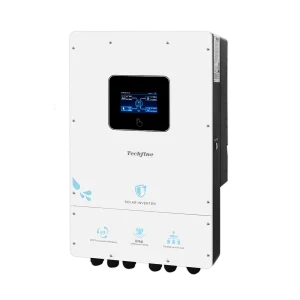
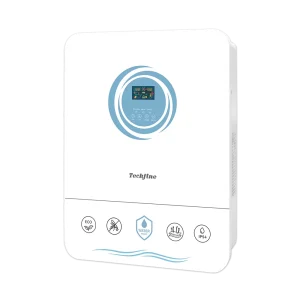
Solar inverters come in various IP ratings depending on their intended use. Most string inverters installed indoors have an IP20 or IP21 rating, while microinverters mounted on rooftops typically have an IP65 or higher rating to withstand weather conditions.
Choosing the correct IP rating of a solar inverter ensures:
- Long-term performance
- Reduced downtime
- Lower repair costs
Therefore, when planning your solar installation, always match the inverter’s IP rating to the environmental conditions it will face.
Conclusion – Choosing the Right Inverter Based on IP Rating
Selecting the right inverter isn’t just about efficiency or wattage — protection matters too. If you’re installing your inverter indoors in a controlled setting, an IP21 inverter might be sufficient. However, for outdoor use, harsh climates, or industrial applications, an IP65 inverter is the safer, more durable option.
Remember:
- IP21 = Basic indoor protection
- IP65 = Full dust-proof + water jet protection
Understanding an inverter’s IP rating helps you avoid costly mistakes and ensures your energy system performs reliably for years.