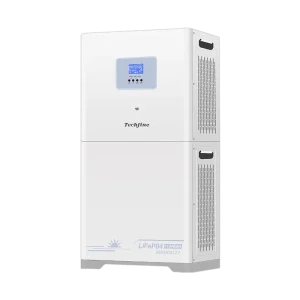

As the global solar energy market continues to grow, all-in-one solar systems and battery-inverter systems have emerged as two of the most popular choices for residential and commercial energy storage. Each offers a unique approach to integrating solar power with battery backup — one focusing on seamless integration and ease of use, the other on flexibility and customization.
Performance: Quick Setup vs. Custom Fit
When it comes to installation and system integration, the all-in-one solar system stands out for its simplicity.
- All-in-One Solar System: These systems are factory-integrated and pre-tested, enabling quick installation with minimal on-site configuration. This plug-and-play approach is ideal for users who want a hassle-free setup, especially in residential or remote applications.
- Battery Inverter System: This modular design allows users to choose different brands and models for the battery and inverter, offering more flexibility. While installation may take longer due to system configuration, it allows greater customization based on budget and performance needs.
Durability and Maintenance: Long-Term Reliability
The longevity and ease of maintenance of a solar energy storage system are crucial to long-term performance.
- All-in-One Solar System: Although these systems are fully integrated, many modern designs include replaceable modules, meaning that if a component fails, it can be replaced without replacing the entire unit. This helps extend the system’s life and reduces long-term costs.
- Battery Inverter System: Since the battery and inverter are separate units, maintenance and upgrades can be done independently. This makes it easier to replace or upgrade components, even if a specific brand is no longer available.
Cost: Upfront Investment vs. Budget-Friendly Scalability
Cost is often the deciding factor when choosing a solar energy storage solution.
- All-in-One Solar System: These systems usually have a higher initial cost due to their integrated design and factory-level optimization. However, they can reduce labor and installation costs, making them a solid investment for users seeking a complete, ready-to-go solution.
- Battery Inverter System: This setup enables a more affordable initial investment, as users can select components within their budget and gradually expand the system over time. It’s particularly well-suited for users with evolving energy needs.
Futureproofing: Compatibility and Expandability
As solar technology continues to evolve, future compatibility becomes a key consideration.
- All-in-One Solar System: While these systems are often locked into a single manufacturer’s ecosystem, many now include external battery ports or expansion slots, allowing for capacity upgrades.
- Battery Inverter System: With the rise of open BMS (Battery Management Systems) and industry-wide standards, cross-brand compatibility is improving. This gives users more freedom to mix and match components, ensuring better long-term value.
Final Thoughts: Integration vs. Flexibility
Both the all-in-one solar system and the battery inverter system offer distinct advantages depending on your specific needs.
- If you are looking for a ready-to-deploy, compact, and efficient solution, especially for home use or small businesses, an all-in-one solar system may be your best bet.
- If you prefer flexibility, cost control, and the ability to scale gradually, the battery inverter system provides a more adaptable and customizable path.
Ultimately, the right choice depends on your budget, system size, scalability needs, and long-term maintenance strategy.