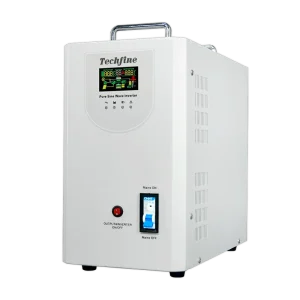

A power inverter is a device that converts direct current (DC) electricity into alternating current (AC) electricity. It allows batteries, solar panels, and other DC power sources to run appliances, tools, electronics, and electrical equipment designed for AC power.
Power inverters are widely used in home backup systems, solar energy systems, RVs, boats, UPS systems, and off-grid power applications.
What Is a Power Inverter?
A power inverter converts DC power from a battery, solar system, vehicle, or energy storage system into AC power. This is important because most household appliances and commercial equipment are designed to operate on AC electricity.
For example, a battery stores DC power, but appliances such as refrigerators, lights, computers, and fans usually require AC power. A power inverter makes this conversion possible.
What Does a Power Inverter Do?
The main function of a power inverter is DC-to-AC conversion. In practical systems, it may also provide voltage regulation, overload protection, short-circuit protection, battery protection, and monitoring functions.
In solar and backup power systems, the inverter is a key component that determines system reliability, load compatibility, and power quality.
How Does a Power Inverter Work?
Modern power inverters use electronic switching devices such as MOSFETs or IGBTs to rapidly switch DC power, creating an AC waveform. The output is then regulated and filtered to provide stable AC electricity for connected loads.
The basic process includes:
- DC input from a battery or solar power source
- High-speed electronic switching
- PWM waveform generation
- Voltage regulation
- Output filtering
- AC output for appliances or electrical systems
Common Types of Power Inverters
Pure Sine Wave Inverter
A pure sine wave inverter provides clean and stable AC power similar to utility grid electricity. It is recommended for sensitive electronics, refrigerators, motors, pumps, medical equipment, and computers.
Modified Sine Wave Inverter
A modified sine wave inverter is usually less expensive and can power basic loads. However, it may not be suitable for sensitive electronics or motor-driven appliances.
Off-Grid Inverter
An off-grid inverter is used in systems without a stable utility grid. It usually works with batteries and solar panels to provide independent AC power for homes, cabins, farms, and backup systems.
Hybrid Inverter
A hybrid inverter combines solar input, battery storage, and grid connection into a single system. It is suitable for users who need both energy savings and backup power.
Power Inverter Efficiency
Inverter efficiency is the ratio of usable AC output power to DC input power. Higher efficiency means less energy is lost as heat during the conversion process.
Modern high-quality inverters often achieve high conversion efficiency, but real-world performance depends on load level, battery voltage, temperature, wiring quality, and inverter design.
Where Are Power Inverters Used?
- Home backup power systems
- Solar energy storage systems
- Off-grid homes and cabins
- RVs and caravans
- Marine power systems
- UPS systems
- Telecom backup power
- Portable power stations
How to Choose the Right Power Inverter
- Calculate the total power of your loads
- Check surge power requirements for motors and compressors
- Choose pure sine wave output for sensitive appliances
- Match the inverter input voltage with your battery system
- Consider whether you need solar charging or grid charging
- Choose protection features such as overload, over-temperature, and short-circuit protection
For solar backup systems, power inverters are often paired with battery storage systems to provide reliable energy storage and AC output.
Conclusion
A power inverter is essential for converting battery or solar DC power into usable AC electricity. It plays an important role in solar systems, home backup power, RVs, marine systems, and off-grid applications.
The right power inverter depends on your load type, battery voltage, required output power, waveform quality, and backup power needs.